

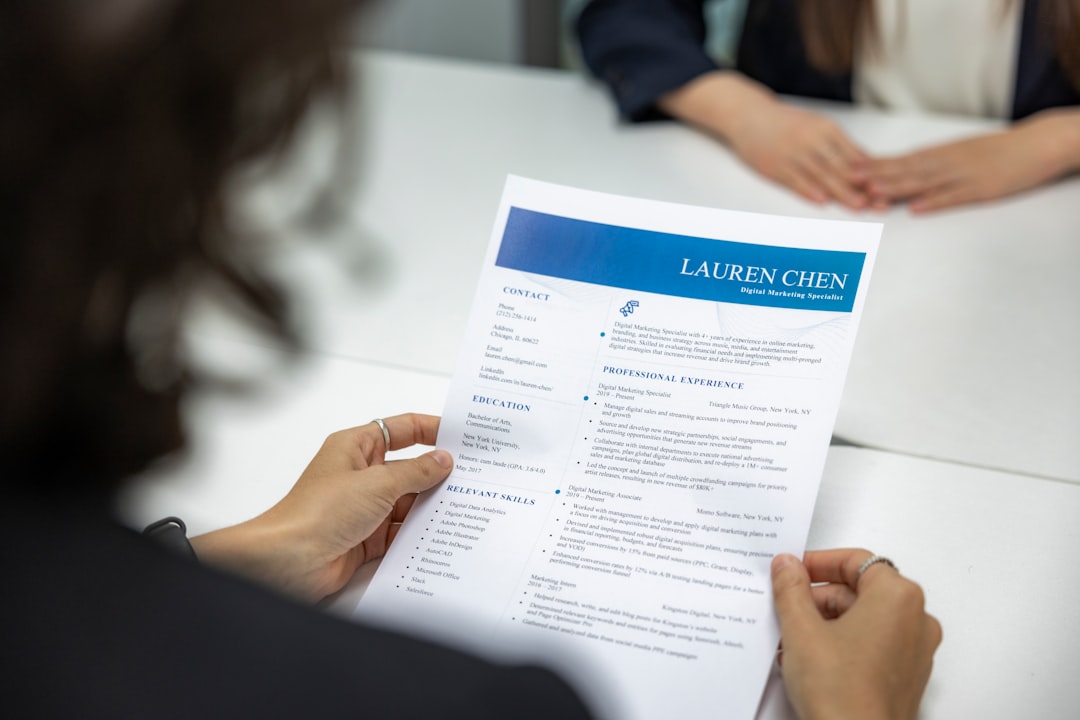
Avoiding Common Resume Mistakes: A Trusted Guide for Job Seekers
Most advice on what makes a good resume feels all over the place. One recruiter wants a one-page snapshot, another asks for every detail. Your resume’s look and length depend on your field, experience, and who reads it. Still, some resume essentials never change: clear language, focused information, and a format that highlights what you bring to the job. Keep reading for resume writing tips that help you avoid common resume mistakes and create an effective resume format tailored to your goals.
Understanding What Makes a Good Resume
The question of what makes a good resume doesn’t have a single answer. Different industries expect different things. A creative professional might benefit from visual elements, while someone in finance or technology should stick to clean, traditional layouts. Your experience level also matters. Entry-level candidates focus on education and skills, while senior professionals highlight years of accomplishments.
What remains constant across all fields is this: your resume must communicate your value quickly and clearly. Recruiters spend an average of six to seven seconds on an initial resume scan. This means your document needs to make an immediate impact.
Core Resume Essentials Every Job Seeker Should Know
Certain resume essentials apply regardless of your background or target role:
Clear contact information at the top of your document
Professional summary or objective that states your career focus
Work experience listed in reverse chronological order
Project details rather than just job duties
Relevant skills that match the position requirements
Education credentials appropriate to your career stage
Clean formatting that guides the reader’s eye naturally
These elements form the foundation of how to write a resume that gets noticed.
Common Resume Mistakes That Cost You Interviews
Many job seekers make the same errors repeatedly. Recognizing these common resume mistakes helps you stand out from other candidates.
Mistake 1: Providing too many details
Avoid providing too many details for each role. Instead share a targeted overview of the role and brief accomplishments while making sure you’ve included skills and experience referenced in the job description. Use keywords from the posting throughout your document.
Mistake 2: Not including tools and technologies used
Providing a description of what you worked on and accomplished without sharing main tools and technologies used could cause you to be overlooked. Be sure to mention the tools, technology stack, and software you have experience with. Often they become key words in a search.
Mistake 3: Poor Formatting Choices
An effective resume format balances visual appeal with readability. Avoid these formatting problems:
Inconsistent fonts or font sizes
Unusual colors that distract from content
Graphics or images that confuse applicant tracking system
Mistake 4: Including Irrelevant Information
Your high school achievements don’t belong on your resume if you’ve graduated from college. Hobbies rarely add value unless directly related to the position. References available upon request wastes valuable space. Every line should support your candidacy for this specific role. Don’t include side hustles that have nothing to do with the bulk of your experience.
Mistake 5: Typos and Grammatical Errors
Mistakes in spelling or grammar suggest carelessness. Proofread multiple times. Ask someone else to review your resume. Use the proofreader in your document software.

Resume Design Advice for Technical Professionals
Technical roles require special consideration when applying resume design advice. Your resume should reflect the precision and attention to detail expected in technology positions.
Keep your layout simple and structured. Use standard section headings that applicant tracking systems recognize. Choose professional fonts like Arial, Calibri, or Times New Roman in 10 to 12 point size. Maintain consistent spacing and alignment throughout.
Technical skills deserve prominent placement. Create a dedicated skills section near the top of your resume. Organize technical competencies into categories such as programming languages, frameworks, databases, and tools. Be honest about your proficiency level with each technology.
Tailoring Your Resume to Each Opportunity
Tailoring your resume can make a real difference. Read the job posting carefully. Identify the key requirements and preferred qualifications. Adjust your professional summary to reflect these priorities. Reorder your skills to emphasize the most relevant ones first. Select work examples that demonstrate your ability to handle similar challenges.
This customization takes time but significantly improves your response rate. Recruiters notice when candidates have taken care to align their background with the role’s needs.
Resume Writing Tips for Recent Graduates
If you lack extensive work history, focus on what you do have. Highlight relevant coursework, academic projects, internships, and volunteer work. Include technical certifications or training programs you’ve completed. Describe campus leadership roles or team projects that demonstrate soft skills like communication and collaboration.
Your education section should appear near the top of your resume. Include your GPA if it’s 3.5 or higher. List relevant coursework only if it directly applies to the target position.
Final Thoughts on Building Your Best Resume
Creating a strong resume requires understanding both universal principles and role-specific expectations. Avoid common resume mistakes by keeping your content focused, your format clean, and your message tailored to each opportunity. Whether you’re entering the job market for the first time or seeking your next career move, these resume writing tips provide a solid foundation for presenting your qualifications effectively.
Your resume represents your professional story. Make sure it’s one worth reading.
Frequently Asked Questions
What is the ideal length for a resume?
For most professionals with less than 10 years of experience, a one-page resume works best. Senior-level candidates with extensive accomplishments can extend to two or three pages. Never sacrifice readability by cramming too much information into a small space.
Should I include a photo on my resume?
In the United States, photos are not standard and may introduce bias into the hiring process. Unless you’re applying for a position where appearance is relevant (modeling, acting), leave photos off your resume. Focus on content that demonstrates your qualifications instead.
How far back should my work history go?
Generally, include the last 10 to 15 years of relevant experience. Older positions can be summarized briefly or omitted entirely unless they’re directly relevant to your target role. This keeps your resume focused on your most current and applicable skills.
What file format should I use when submitting my resume?
PDF format preserves your formatting across different devices and operating systems. Some applicant tracking systems prefer Word documents, so check the job posting for specific instructions. Always name your file professionally, such as “FirstName_LastName_Resume.pdf.”
How often should I update my resume?
Update your resume every time you complete a significant project, earn a new certification, or develop a new skill. Don’t wait until you’re actively job searching. Regular updates ensure you don’t forget important accomplishments and keep your document ready when opportunities arise.
BriTech Group, Inc.
BriTech Group plays a pivotal role in connecting talented engineers and leaders with growing companies at the forefront of cutting edge technology advancements and other leading innovations. Our expertise helps bridge the gap between demand and supply of skilled technical personnel, fostering a dynamic environment for growth and innovation. To explore more about our spotlights on pioneering technology and innovation, check out this article. For more information about our services, visit BriTech Group.