

Revolutionizing Data Management: How DNA and Quantum Storage are Shaping the Future
In an era where the digital universe expands at an unprecedented rate, the demand for innovative data storage solutions has never been more critical. As traditional storage methods struggle to keep pace with the ever-growing volume of information, breakthrough technologies such as DNA data storage and quantum storage systems are paving the way for a transformative future. These cutting-edge advancements promise not only to enhance the scalability and sustainability of data management but also to redefine how industries access and analyze vast datasets. In this exploration, we delve into the potential of DNA and quantum storage technologies to revolutionize the landscape of data management, offering insights into their implications for IT professionals and businesses worldwide. Learn more about the future of data storage.
The Evolution of Data Storage
The journey of data storage has been marked by continuous innovation, driven by the ever-increasing demand for capacity and efficiency. This section explores the limitations of traditional storage methods and the emerging needs in data management that push the boundaries of technology.
Traditional Storage Limitations
Traditional data storage methods, such as hard disk drives (HDDs) and solid-state drives (SSDs), have served us well for decades. However, they are reaching their physical limits in terms of capacity and efficiency.
HDDs, while cost-effective for large-scale storage, experience constraints due to their mechanical nature. They undergo physical wear and tear, have relatively slow access times, and consume significant power.
SSDs offer faster performance and lower power consumption but come with their own set of challenges. They have limited write cycles and are more expensive per gigabyte compared to HDDs, making them less suitable for long-term, large-scale data storage.
Emerging Needs in Data Management
The digital age has ushered in an era of unprecedented data growth, driven by factors such as the Internet of Things (IoT), artificial intelligence, and big data analytics. This exponential increase in data volume demands storage solutions that are not only capacious but also energy-efficient and durable.
Organizations now require storage systems that handle diverse data types, from structured databases to unstructured multimedia files. Real-time data access and processing have also become critical in many industries.
Moreover, the growing emphasis on data longevity and sustainability drives businesses and research institutions to seek storage solutions that preserve data for decades or even centuries without degradation.
DNA Data Storage: A New Frontier
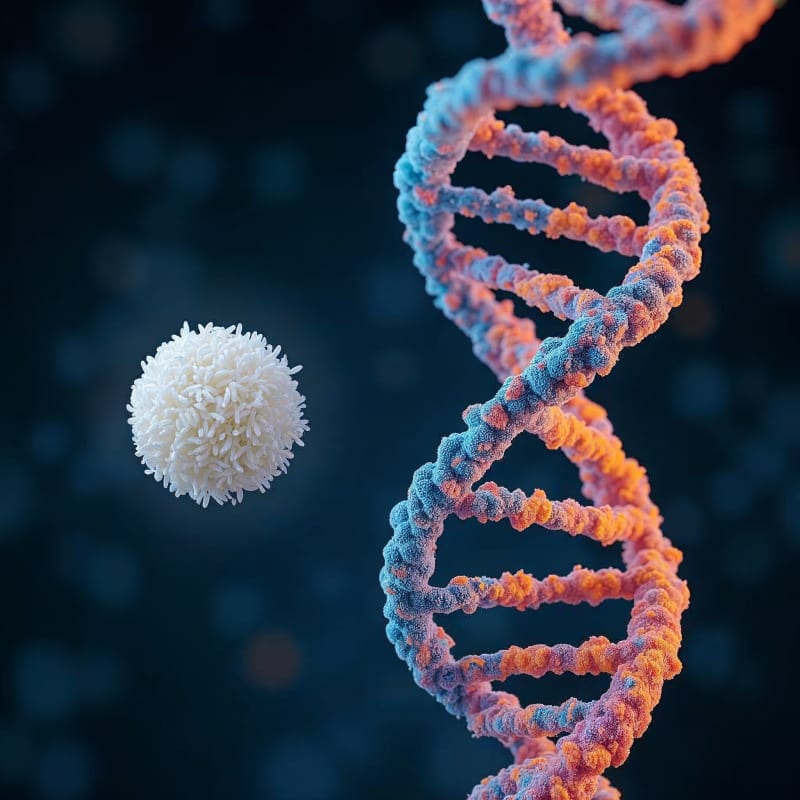
DNA data storage represents a paradigm shift in how we approach long-term data preservation. This section delves into the fascinating world of storing digital information in the building blocks of life.
How DNA Storage Works
DNA data storage is an innovative approach that leverages the molecular structure of DNA to store digital information. The process involves several key steps:
Encoding: Digital data (binary code) translates into DNA sequences using a specific encoding scheme.
Synthesis: The encoded DNA sequences become chemically synthesized, creating physical strands of DNA that represent the data.
Storage: These DNA strands remain stored in a controlled environment to preserve their integrity.
Retrieval: When needed, the DNA undergoes sequencing to read the stored information.
Decoding: The sequenced DNA then translates back into its original digital format.
This method exploits DNA’s natural data storage capabilities, which have evolved over billions of years.
Benefits and Challenges
DNA data storage offers several remarkable advantages:
Density: DNA stores massive amounts of data in an incredibly small space. A single gram of DNA could theoretically store up to 215 petabytes (215 million gigabytes) of data.
Longevity: Under proper storage conditions, DNA can remain stable for thousands of years, far outlasting current digital storage media.
Energy Efficiency: Once encoded in DNA, data requires no power to maintain, unlike traditional electronic storage systems.
However, challenges remain:
Cost: DNA synthesis and sequencing processes are currently expensive, though costs decrease rapidly.
Speed: Reading and writing data to DNA takes longer compared to electronic storage methods, making it unsuitable for frequent access.
Error Rates: While DNA is stable, errors can occur during synthesis and sequencing, requiring robust error correction mechanisms.
Quantum Storage Systems
Quantum storage systems represent another frontier in data management, leveraging the principles of quantum mechanics to store and process information in ways that classical systems cannot.
Principles of Quantum Storage
Quantum storage systems operate on fundamentally different principles compared to classical storage:
Superposition: Quantum bits (qubits) exist in multiple states simultaneously, allowing for complex data representations.
Entanglement: Qubits interconnect in ways that classical bits cannot, enabling unique data processing capabilities.
Quantum Error Correction: Special techniques maintain the integrity of quantum information, which is inherently fragile.
These principles allow quantum storage systems to potentially store and process vast amounts of data in ways that are impossible with classical systems.
Potential Applications and Impact
Quantum storage systems present vast potential applications and could revolutionize various fields:
Cryptography: Quantum storage could enable unbreakable encryption methods, enhancing data security across industries.
Drug Discovery: The ability to simulate complex molecular interactions could accelerate pharmaceutical research.
Financial Modeling: Quantum systems process complex financial models with unprecedented speed and accuracy.
Climate Modeling: More accurate climate predictions can be made by processing vast amounts of environmental data.
Quantum storage extends beyond just capacity by transforming how we approach data processing and analysis, potentially solving problems that are intractable with classical computing methods.
However, significant challenges remain in making quantum storage systems practical and scalable. Researchers and engineers tirelessly work to overcome these hurdles, bringing us closer to a future where quantum storage becomes a reality in data management.
BriTech Group, Inc.
None of these remarkable technological advancements would be possible without the expertise and dedication of engineers, developers, and scientists who create and innovate. At the forefront of connecting tech talent with opportunities to build the future is Britech Group. Our company specializes in matching skilled professionals with leading organizations, ensuring that groundbreaking projects have the right people behind them. We invite both hiring managers and candidates to explore the possibilities with us. Discover how we can bring your technical visions to life by visiting Britech Group’s website and check out our latest Tech Spotlight blog to stay updated on technology and scientific advancements.