

Revolutionizing Manufacturing: The Impact of Automation and Emerging Technologies
In today’s fast-paced manufacturing industry, controls automation leads a wave of groundbreaking innovations across numerous fields. With industries ranging from silicon and electronics to pharmaceuticals and medical devices, the use of advanced technologies like PLCs, machine vision, and smart sensors is transforming production methods. Companies are seeking enhanced efficiency and precision, making predictive maintenance and the implementation of industrial robots truly transformative. Additionally, advancements such as x-ray and CT scanning are substantially improving quality control, while ethical AI ensures technology is used responsibly. This article examines how these technologies are raising operational standards and ushering in a new era of manufacturing excellence.
As a result, controls automation is redefining the manufacturing domain by boosting efficiency, quality, and durability across sectors. This portion examines the indispensable role of PLCs, machine vision, and predictive maintenance in modernizing manufacturing operations.
Achieving Efficiency with PLC
Programmable Logic Controllers (PLCs) are central to contemporary manufacturing, providing unmatched control and efficiency. Built to endure tough industrial conditions and handle intricate automation tasks, these compact, durable machines excel at managing various manufacturing processes, ranging from production lines to packaging systems. Their real-time input and output processing capabilities allow for precise machinery control, increasing productivity and reducing downtime.
PLCs offer notable flexibility. They can be reprogrammed effortlessly to suit shifting production demands, making them perfect for industries with varied product lines or frequent process adjustments.
Machine Vision in Quality Assurance
Machine vision systems have redefined quality assurance in manufacturing, delivering speedy, accurate, and consistent inspection abilities. These systems use cameras and image processing software to identify defects, confirm assembly, and maintain product quality. In electronics manufacturing, machine vision can inspect circuit boards for solder issues or component placement mistakes at rates far beyond human capability. Likewise, in pharmaceutical production, it can confirm pill quantity, color, and shape for product uniformity.
The inclusion of AI and deep learning algorithms with machine vision has further boosted its performance. These sophisticated systems can learn over time, improving accuracy and adapting to new product variations without extensive reprogramming.
Predictive Maintenance for Extended Equipment Life
Predictive maintenance is a breakthrough in manufacturing, going past reactive and preventive methods to extend equipment life and reduce downtime. By employing data analytics and machine learning to foresee when maintenance is needed, this approach provides immense value. By evaluating sensor data and past performance records, predictive maintenance systems can spot potential issues before they arise. Therefore, maintenance teams can schedule repairs during planned outages, preventing expensive unexpected failures.
Predictive maintenance benefits extend beyond equipment longevity. It enhances energy efficiency, as well-maintained machines generally use less power, and improves safety by mitigating the risk of equipment-related incidents.
Cutting-Edge Technologies at Work
The manufacturing industry is experiencing a technological evolution with the introduction of advanced imaging methods, ethical AI, and industrial robots. These cutting-edge technologies are reshaping production processes, quality assurance, and workforce dynamics.
X-Ray and CT Scanning Advances
X-ray and CT scanning technologies have transformed quality control and inspection processes in manufacturing. As these non-destructive testing techniques permit thorough product examination without compromising integrity, they are invaluable. For instance, in aerospace manufacturing, CT scans can detect minute internal flaws in complex components, ensuring the highest safety standards. Similarly, X-ray inspection in electronics can identify hidden solder joint issues or internal damage on densely packed circuit boards.
By integrating AI with these scanning technologies, their capabilities are further enhanced. Machine learning algorithms can now review scan data to catch anomalies human inspectors might overlook, improving accuracy and speed of quality control processes.
Applying Ethical AI in Production
Incorporating AI in manufacturing processes presents both opportunities and ethical challenges. Ethical AI in production emphasizes the creation and application of AI systems that are transparent, fair, and accountable. One important aspect of ethical AI is preventing biases in automated decision-making. For instance, in quality assurance, AI systems should be trained on varied datasets to prevent unjust rejection of products based on irrelevant traits.
Transparency is another vital aspect. Manufacturers increasingly adopt explainable AI models to offer clear reasoning for AI-driven decisions, enabling human operators to understand and validate critical process actions.
The Evolution of Industrial Robots
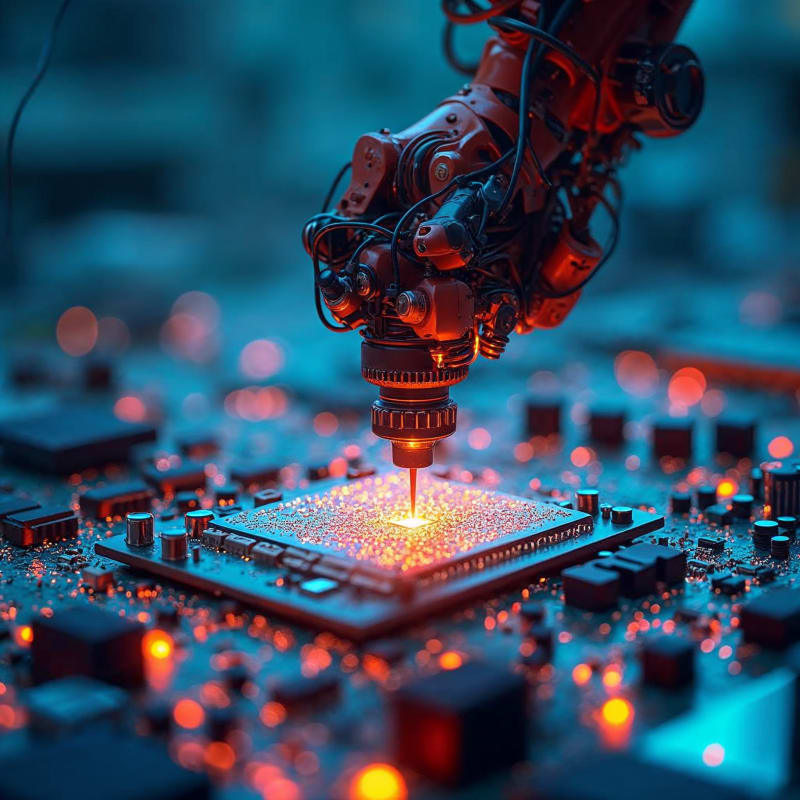
Industrial robots have become essential in contemporary manufacturing, offering precision, speed, and uniformity in various tasks. From welding and assembly to packaging and palletizing, these robots reshape production lines across industries. The latest innovation, collaborative robots or cobots, is designed to work alongside human operators, combining robots’ strength and precision with human adaptability and problem-solving abilities.
The integration of industrial robots isn’t merely about replacing human labor; it’s about complementing human capabilities. By handling repetitive or hazardous tasks, robots enable human workers to concentrate on complex, value-added activities demanding creativity and critical thinking.
The Impact of Smart Sensors and Future Trends
Smart sensors are leading the Industry 4.0 revolution, empowering unprecedented data collection and analysis within manufacturing settings. Consequently, this section delves into how these sophisticated sensors are advancing precision, connectivity, and human-machine collaboration in future factories.
Utilizing Smart Sensors for Enhanced Precision
Smart sensors are transforming manufacturing by delivering real-time, high-accuracy data on different production process aspects. These advanced devices do more than measure; they incorporate processing abilities to intelligently analyze and communicate data, significantly impacting manufacturing. In chemical production, smart pH sensors can not only gauge acidity but also account for temperature changes and alert operators to potential issues. This precision ensures consistent product quality and minimizes waste.
By integrating smart sensors with IoT platforms, a comprehensive monitoring of entire production lines is possible. This holistic approach allows manufacturers to optimize processes, predict maintenance requirements, and quickly address any deviations from desired conditions.
Industry 4.0 and the Connected Factory
Industry 4.0 marks the fourth industrial revolution, highlighted by the integration of digital technologies into manufacturing processes. Central to this concept is the connected factory, where all production elements are linked and communicating in real-time. Key components of Industry 4.0 include:
Internet of Things (IoT) devices
Cloud computing
Big data analytics
Artificial Intelligence and Machine Learning
These technologies collaborate to create a smart manufacturing environment where decisions are data-driven, processes are real-time optimized, and production is highly adaptable and efficient.
Trends in Human-Machine Collaboration
Effective human-machine collaboration is the future of manufacturing. This trend emphasizes balancing human skills and machine capabilities to boost productivity and innovation. Augmented Reality (AR) plays a significant role in this collaboration. AR devices overlay digital information on the physical world, assisting workers with intricate assembly tasks or maintenance procedures, thus bridging the gap between human expertise and machine precision.
Going forward, the emphasis will be on creating intuitive interfaces and AI systems that understand and anticipate human needs, resulting in a more seamless and efficient manufacturing environment.
If you’re in search of exceptional talent to propel your automation manufacturing projects, consider Britech Group and check out their latest Tech Spotlight blog to stay updated on technical and scientific breakthroughs. With over two decades of experience specializing in recruiting skilled professionals in controls automation, PLC, Machine Vision, and more, BriTech Group connects you with candidates who can significantly impact your business.