

Exploring AI Software Teams: How Multiple AI Agents Collaborate in Software Development
Forget relying on one AI tool to handle everything in software development. Today, multiple AI agents can split tasks—one writes code, another handles tests, while others check security and update docs. These AI software teams coordinate through AI task orchestration, making your workflow smoother and more reliable. Let’s explore how automated AI collaboration is reshaping software engineering. For more insights, check out this article on parallel AI agents transforming software development.
Understanding AI Software Teams
The concept of AI software teams marks a shift from single-purpose tools to coordinated groups of specialized AI agents working together on complex projects.
Role of Multiple AI Agents
AI software teams function like human development teams but with each AI agent handling specific tasks. This specialization allows for better results than a single all-purpose AI.
When you work with multiple AI agents, each one brings focused expertise to the table. For example, one agent might excel at generating Python code while another specializes in JavaScript. This division of labor mirrors human teams where developers have their own strengths.
The magic happens in how these agents communicate. Unlike isolated tools, AI software teams pass information between members. Code created by one agent flows to the testing agent, which then shares results with the security review agent.
This approach breaks down complex projects into manageable pieces. Instead of asking one AI to handle everything from database schema design to front-end styling, you can assign each component to the most qualified AI agent.
Benefits of AI Task Orchestration
AI task orchestration delivers immediate time savings by automating the handoffs between development stages. This means no more waiting for team members to become available.
The coordination happens automatically. When one AI agent finishes writing code, the orchestration system alerts the testing agent to begin its work. This continuous flow eliminates bottlenecks that slow down projects.
You’ll notice fewer errors too. Each specialized agent focuses on what it does best, reducing mistakes that happen when a single system tries to handle too many different tasks. The testing agent, for instance, can dedicate all its resources to finding bugs without worrying about code creation.
Cost reduction is another major win. Instead of hiring specialists for every aspect of development, you can deploy AI agents for routine tasks while your human team tackles creative challenges. This makes development more affordable without sacrificing quality.
Automated AI Collaboration Techniques
AI agents collaborate using shared memory systems that keep track of project context across the entire team. This shared knowledge base grows smarter over time.
The foundation of this collaboration is prompt chaining. One AI agent’s output becomes the input for the next agent in line. For example, when the code-writing agent finishes a function, it passes both the code and its reasoning to the testing agent, which then creates tests based on that information.
Communication protocols between agents follow standardized formats. These protocols ensure that information passes clearly between different AI systems, even when they’re built on different platforms or use different underlying models.
Microsoft has pioneered work in this area with their multi-agent intelligence design framework, which helps create AI systems that can work together effectively. Their research shows that proper communication structures between AI agents can lead to outcomes that surpass what any single AI could accomplish.
AI Development Tools in Action

When AI software teams are properly configured, they create an uninterrupted workflow from initial code creation through testing, security review, and documentation.
Code Writing and Testing Automation
Code generation AI has moved beyond simple snippets to creating complete functions and classes based on clear requirements. This saves you hours of typing boilerplate code.
These AI coding assistants now understand project context. They don’t just write isolated functions but can add code that fits within your existing codebase. When you describe a new feature, the AI considers your application’s architecture and coding standards.
The testing agents work in perfect sync with code generation. As soon as new code appears, the testing AI creates comprehensive test cases covering both expected behavior and edge cases. This immediate feedback loop catches problems early, when they’re easiest to fix.
What makes this approach powerful is the back-and-forth between coding and testing agents. When tests fail, the testing agent provides specific feedback that the coding agent uses to fix the problem. This automated debugging cycle can resolve many common issues without human intervention.
Security and Performance Review AI
Security review agents scan code for vulnerabilities as it’s being written, not just at the end of development. This early detection prevents security flaws from becoming deeply embedded in your application.
These specialized agents check for common security issues like SQL injection, cross-site scripting, and authentication weaknesses. They don’t just flag problems—they suggest fixes that maintain the code’s functionality while eliminating the security risk.
Performance analysis happens in parallel with security reviews. AI agents examine code for inefficient algorithms, memory leaks, and database query bottlenecks. This proactive approach means your application runs faster from the start rather than requiring extensive optimization later.
IBM has developed advanced systems for multi-agent collaboration in security reviews, allowing multiple specialized AI agents to work together to identify complex security patterns that might be missed by a single system.
Documentation Updates by AI
Documentation AI keeps your technical docs in perfect sync with code changes. As features evolve, the documentation updates automatically, eliminating outdated instructions.
These documentation agents don’t just create basic comments. They generate comprehensive API references, usage examples, and troubleshooting guides based on the actual code behavior. When developers update a function’s parameters, the documentation reflects those changes immediately.
The most advanced documentation agents can even create visual elements like flowcharts and sequence diagrams based on code analysis. These visual aids make complex systems easier to understand at a glance.
Documentation quality improves because the AI has access to the complete codebase context. It can highlight relationships between different parts of the system and explain how components work together, creating more useful documentation than isolated descriptions of individual functions.
AI in Software Engineering
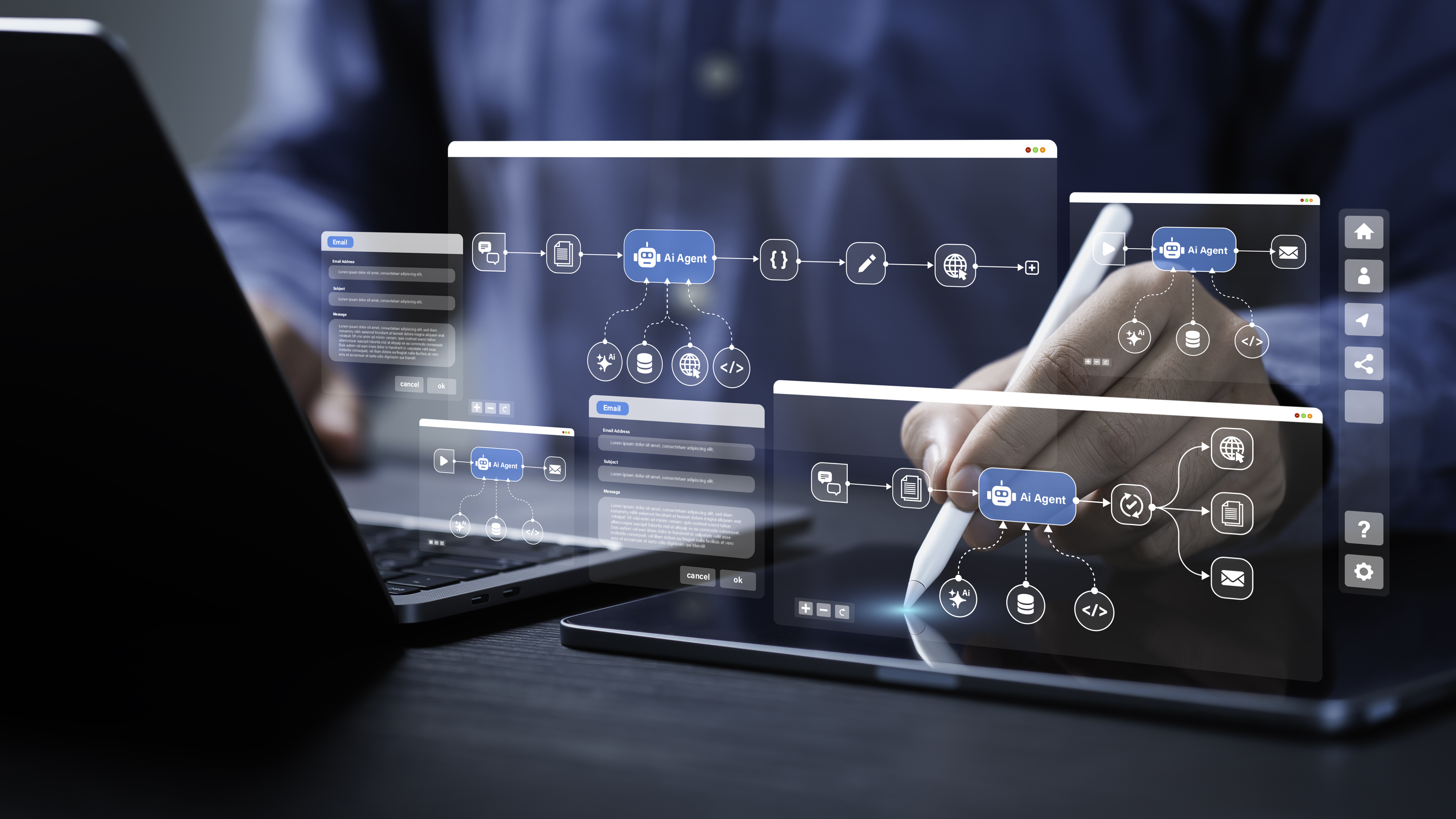
The integration of AI software teams is changing how development teams work, creating new workflows that combine human creativity with AI efficiency.
Challenges and Solutions
Team resistance often stems from fear of job replacement. The solution is positioning AI agents as assistants that handle routine tasks so developers can focus on creative work.
Training challenges arise when AI agents need to understand your specific codebase. Creating a knowledge base of your architecture, coding standards, and business logic helps AI agents produce relevant results from day one.
Integration with existing tools can be tricky. The most successful implementations start small by connecting AI agents to one part of the workflow, like code reviews or test generation, before expanding to full pipeline automation.
Quality control remains essential. Even with AI software teams, human oversight ensures the final product meets standards. Setting up approval gates where human developers review AI-generated work maintains quality while still gaining efficiency benefits.
Developers on Reddit have shared practical lessons learned when designing multi-agent teams, emphasizing the importance of clear communication protocols between agents.
Future of AI Software Teams
The next generation of AI software teams will feature self-improving capabilities. These systems will analyze their performance and adjust their approach based on what works best for your specific projects.
Cross-language development will become seamless. AI agents will collaborate to build applications that span multiple programming languages, with each agent handling the language it knows best while maintaining consistent architecture.
Human-AI hybrid teams represent the most promising direction. Rather than fully automated development, we’ll see humans working alongside AI teams, with people handling creative design and complex decision-making while AI handles implementation details.
The pace of progress in this field is remarkable. Just a year ago, most AI coding assistants worked in isolation. Today, orchestrated teams of specialized AI agents can handle complex development workflows. This rapid evolution suggests that the capabilities of AI software teams will continue to expand dramatically in the coming years.
As these systems mature, they’ll become increasingly accessible to smaller development teams. The specialized expertise that once required large teams of senior developers will be available through AI software teams, democratizing access to high-quality development practices.
BriTech Group, Inc.
BriTech Group excels in connecting skilled engineers, management, and C-level executives with leading companies at the forefront of cutting-edge technology and innovation. Our expertise bridges the gap between the demand and supply of high-caliber technical personnel, promoting a dynamic environment for growth and advancement. To learn more about our focus on pioneering technology and innovation, check out this article. For more information about our services, visit Britech Group
.